Fourth Generation Inclusive

Historical Documents of Genealogical Interest to Researchers of North Carolina's Free People of Color

Category: Photographs

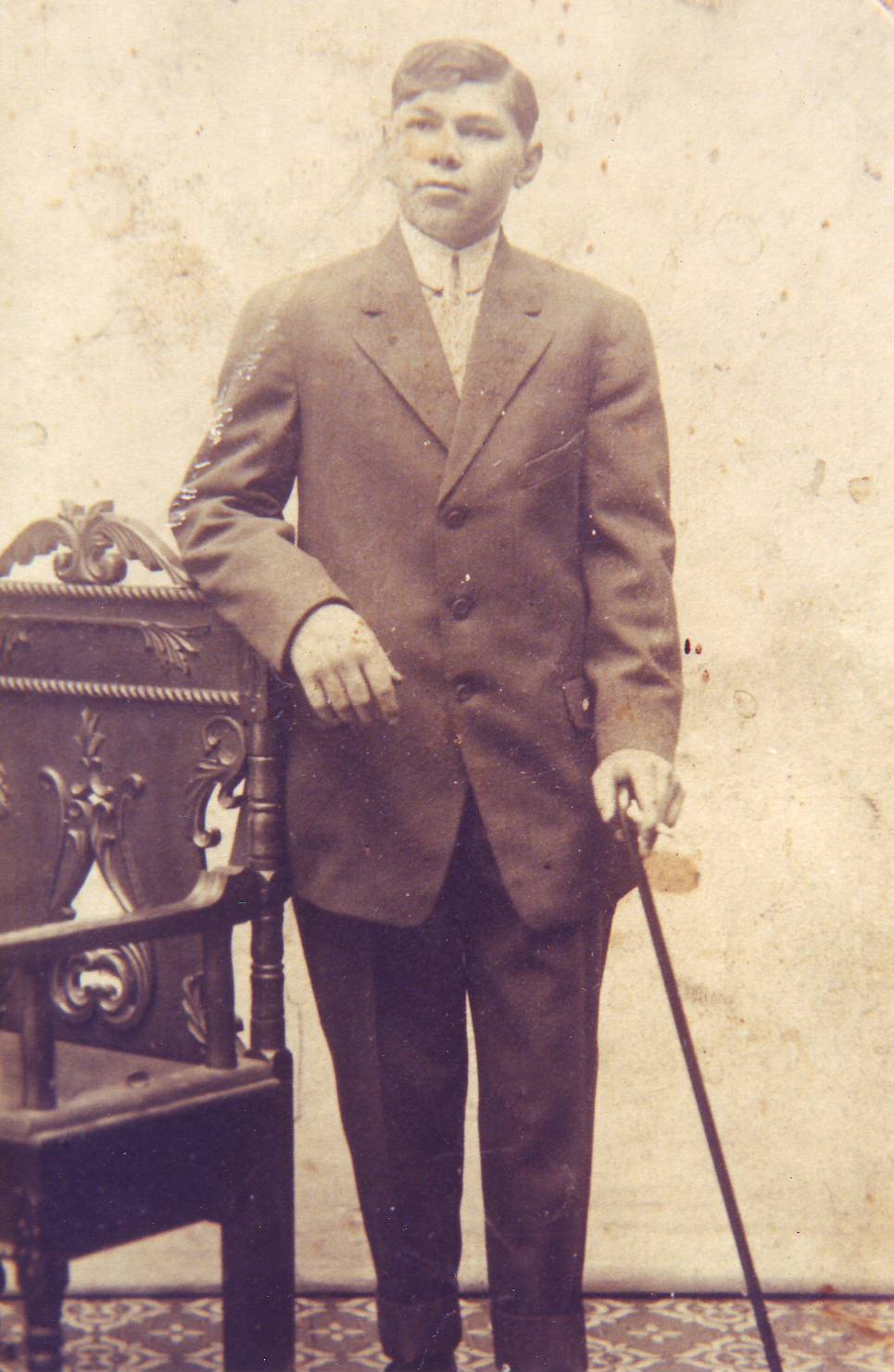
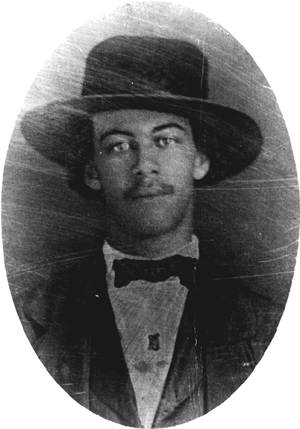
John Anthony Copeland Jr.

Image

John Anthony Copeland, Jr. (1834–1859) was born free in Raleigh, North Carolina, to John Anthony Copeland, who was born into slavery in 1808, and Delilah Evans, born free in 1809. Copeland, Sr. was emancipated about 1815. The family lived near Hillsborough, North Carolina, until 1843, when the family migrated to Cincinnati and then Oberlin, Ohio, where some of his wife’s brothers and their families also lived.

John Copeland, Jr. worked as a carpenter and briefly attended Oberlin College. As a young man, he became involved in the Oberlin Anti-Slavery Society.  In September, 1858, with his uncles Henry and Wilson Bruce Evans, Copeland was one of the thirty-seven men involved in the Oberlin-Wellington Rescue to free John Price, a runaway slave who had been captured and held by authorities under the 1850 Fugitive Slave Act. The men freed the slave and helped him escape to Canada.

In September 1859, Copeland was recruited to John Brown’s armed group by his uncle, Lewis Sheridan Leary. Brown led twenty-one followers, sixteen white and five black men, and captured the armory guards of Harpers Ferry, then part of Virginia, where they took control of the Federal arsenal. The raiders were soon pinned down by Virginia militiamen until U.S. marines led by Robert E. Lee arrived to apprehend them.

At Harper’s Ferry, Copeland and John Henry Kagi, a white raider, were to seize control of Hall’s Rifle Works. Kagi and several others were killed while swimming across the Shenandoah River to escape. Copeland was captured alive, and he, John Brown, and five others were held for federal trial.  Copeland was found guilty of treason and murder and sentenced to death by hanging.

Six days before his execution, he wrote to his brother, referring to the American Revolution:

“And now, brother, for having lent my aid to a general no less brave [than George Washington], and engaged in a cause no less honorable and glorious, I am to suffer death. Washington entered the field to fight for the freedom of the American people – not for the white man alone, but for both black and white. Nor were they white men alone who fought for the freedom of this country. The blood of black men flowed as freely as the blood of white men. Yes, the very first blood that was spilt was that of a negro…But this you know as well as I do, … the claims which we, as colored men, have on the American people.”

Copeland’s family continued his struggle by taking up arms during the Civil War. His father served as a cook for the 55th Ohio Infantry, and his younger brother Henry E. Copeland served as a first sergeant in Douglass’s Independent Battery of Colored Artillery in Kansas.

Adapted from http://www.nccivilwar150.com/history/john-brown-nc.htm. Photo courtesy of Kansas Historical Society.
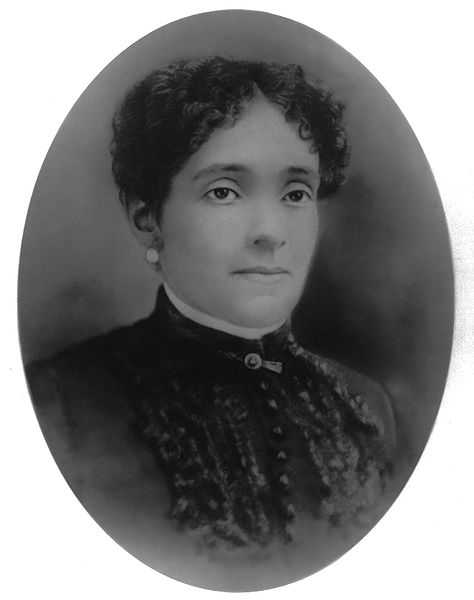
Eliza Simmons Bryant.

Image

ELIZA SIMMONS BRYANT (1827–1907) founded a home in Cleveland, Ohio, for elderly African-Americans, many, freed slaves.  The Cleveland Home for Aged Colored People, now known as Eliza Bryant Village, continues to serve some of Cleveland’s most vulnerable residents.

Eliza Bryant’s official biography asserts that she “was born in North Carolina to Polly Simmons, a slave, and her master. She was raised on a plantation in Wayne County. In 1848, Polly Simmons was freed, and moved with her family to Cleveland, Ohio, where she purchased a home, with funds from her master.” In fact, Eliza was born free to Polly Simmons, who was part of a large family whose freedom dated from at least the mid-18th century.  Her father may have been white, and may have employed her mother, but was not her master.  (Eliza turned 21 in about 1848 — was a release from an indenture the “freedom” attributed to her mother in her bio?) The 1850 census of the South Side of the Neuse, Wayne County, shows: Polly Simmons, 47, her children Eliza, 23, Buckner, 21, and George, 18; plus Nancy A., 17, and Willie Grice, 15, and Rufus Daniel, 14; all described as mulatto. They are listed among a cluster of Simmonses, including 84 year-old Phereby Simmons, who may have been Polly’s mother.

Photo courtesy of http://www.elizabryant.org.  Wikipedia; US Federal Population Schedule.

Lewis Sheridan Leary.

Image

Lewis Sheridan Leary (1835–1859), a harnessmaker from Oberlin, Ohio, joined John Brown’s unsuccessful raid on Harpers Ferry, where he was killed.  Leary was born in Fayetteville, North Carolina, to Matthew N. Leary, also a harnessmaker, and Julia Memril Leary.  His paternal grandfather was an Irishman, Jeremiah O’Leary, who fought in the American Revolution under General Nathanael Greene. A paternal great-grandparent, Abram Revels, a free man of color, was also a Revolutionary War veteran. His mother’s grandmother was “French Mary,” a freed West Indian who was a well-regarded cook in Fayetteville.

In the mid-1850s, Leary moved to Oberlin, Ohio, where two of his sisters had settled. One sister, Sarah, had married Henry Evans, whose sister Delilah Evans Copeland, the mother of John A. Copeland Jr., another John Brown follower.  Leary married Oberlin College graduate Mary Patterson, and had a daughter, Louise.  Leary became involved with abolitionists in Oberlin, which had an active community. Later, he met John Brown in Cleveland, Ohio.

In 1858, Leary joined in the Oberlin-Wellington Rescue, when fugitive slave John Price was forcibly taken from the custody of a U.S. Marshal to prevent his being returned to slavery . He was not among the 37 men (twelve of them free men of color) who were indicted and jailed for their actions.

Accompanied by Copeland, Leary joined John Brown at Chambersburg, Pennsylvania.  Leary died eight days after the attack on Harper’s Ferry from wounds suffered in the conflict. Copeland was captured, tried and later executed.

Leary’s family remained in Fayetteville during the Civil War.  During Reconstruction, his father and a brother served as city councilmen and county commissioners, and his brother Matthew Leary Jr. was an early trustee of the college that became Fayetteville State University. Leary’s youngest brother, John Sinclair Leary, graduated from Howard University in 1871 and was one of the earliest black attorneys admitted to the bar in North Carolina. He served in the state legislature for two terms as a Republican representative for Cumberland County during Reconstruction, and in 1884 was sent as a delegate to the National Republican Convention. He later founded and served as the first dean of the Shaw University Law School, and in the 1890s moved his family and practice to Charlotte. Today the Charlotte chapter of the North Carolina Association of Black Lawyers is named the John S. Leary Bar Association in his honor.

 Adapted from Tar Heels at Harper’s Ferry, October 16-18, 1859,”  http://www.nccivilwar150.com/history/john-brown-nc.htm, published by the North Carolina Department of Cultural Resources.

Photograph, c. 1850s, courtesy of Oberlin College Archives, Oberlin, Ohio.

In the 1860 census , Fayetteville, Cumberland: Matthew Leary, 48, wife Julia A., 42, Matthew, 17, Lewis S., 15, Julia A., 12, John S., and Mary E., 13.

John and Sarah Simmons Henderson.

ImageJOHN HENRY HENDERSON and wife SARAH ELIZABETH SIMMONS HENDERSON.  John was born in 1860 in Sampson County to James and Eliza Armwood Henderson.  Sarah was born about 1868 to Bryant and Elizabeth Wynn Simmons. Both died near Dudley, Wayne County.

George W. Aldridge.

Image

GEORGE W. ALDRIDGE was born about 1851, probably in Sampson County, to Robert Aldridge and Mary Eliza Balkcum Aldridge.  He farmed near Dudley, in southern Wayne County, and, after his marriage to Dora Greene, near Fremont, in northern Wayne County.  He died in the 1930s.

Photograph courtesy of Paul Ashford. Sidenote: George Aldridge was the brother of my great-great-grandfather, John W. Aldridge.  Another brother, Mathew W. Aldridge, is shown here.  — LYH.

James Henry Henderson.

James Henry HendersonJAMES HENRY HENDERSON was born about 1838 in the Upper Richlands district of Onslow County. His father was James Henderson (1815-ca1890) and his mother might have been named Sally Skipp. With his father and siblings, he migrated to Sampson, then southern Wayne County. He married twice and died near Faison, Duplin County, in 1920.

[Sidenote: James H. Henderson was the brother of my great-great-great-grandfather Lewis Henderson. — LYH.]

Mathew W. Aldridge.

ImageMATHEW W. ALDRIDGE was born about 1857 in Sampson County to Robert Aldridge and Mary Eliza Balkcum Aldridge.  He married Fannie Cora Kennedy and operated a small grocery in Goldsboro, where he died in 1920.

William Marshall Artis.

Image

WILLIAM MARSHALL ARTIS was born in 1875 near Eureka, Wayne County, to Adam T. Artis (1831-1919) and Frances Seaberry Artis (1845-1878).  He lived and farmed in the area all his life and died in 1945.

[Sidenote: Louvicey Artis Aldridge was William M. Artis’ sister.]

Mary Eliza Balkcum Aldridge.

ImageMARY ELIZA BALKCUM ALDRIDGE was born in 1829 in Duplin County.  Her mother was probably Nancy Balkcum (ca1800-1854), a white woman, and her father was likely a black or mixed-race man.  Around 1855, she married Robert Aldridge (1819-1899). They settled first in northern Sampson County, but by 1870 had a large farm near Dudley, Wayne County.

[Eliza B. Aldridge was my great-great-great-grandmother. –LYH]

Dock Jacobs.

ImageDOCK JACOBS, son of Jesse A. Jacobs Jr. (1856-1926) and Sarah Bridgers Jacobs (1866-ca1895).

See also “Jesse & Sarah Henderson Jacobs.”

Original in possession of Lisa Y. Henderson.