Fourth Generation Inclusive

Historical Documents of Genealogical Interest to Researchers of North Carolina's Free People of Color

Category: Migration

Register of (NC-born) Negroes & Mulattos: Bartholomew County, Indiana, no. 2.

Christy Ann Blanks, age 18, born Robeson County NC, registered 21 Sep 1853. She was described as a mulatto woman; 5 feet 9; no marks or brands; unmarried. Witness: Edward A. Herod.

Eli Blanks, age 13, born Robeson County NC, registered 21 Sep 1853. He was described as a mulatto boy; “young, likely and growing finely;” hair nearly straight; no marks or brands; son of John Blanks. Witness: Edward A. Herod.

Elizabeth Blanks, age 15, born Robeson County NC, registered 21 Sep 1853. She was described as a mulatto girl; 5 feet 5 inches and growing; has a blemish on the ball of the right eye; small scar on right arm; no other marks. Witness: Edward A. Herod.

John Blanks, age 54, born Robeson County NC, registered 21 Sep 1853.  He was described as a mulatto man; 6 feet high; no hair on the top of his head where hair ought to grow; crooked left wrist; right big toe wounded by an ax.  Witness: Edward A. Herod.

Willis Blanks, age 21, born in Robeson County NC, registered 21 Sep 1853. He was described as a mulatto man; 6 feet 2; scar on left side of left wrist about one inch long; no other marks. Witness: Edward A. Herod.

Having the desier to travel to Virginia to seek better imployment.

North Carolina Perq’s County }  This may Cartefy that the Bearer Hereof a Negro man named Ben is a free Negro who formerly belonged to Mr. Jonathan Sharrod Deceased who having Many Slaves & no Children alive not Desiering his Slaves Should Serve another Master Did in his will Generously give them freedom Which if Disputed may be found on Record in the Court of the Said County aforsaid & the aforenamed Negro Man having a Desier to travel to Virginia to Seek better imployment we the Subscriber Do Cartefy that the Said Negro is a free man has Ever Sence his working for himself behaved Very honest ther fore we the Subscribers Do Recommend The Said to Such Gentlemen as Shall imploy him.

Witnes our hands this 21 Januy 1774   /s/ Richard Ratlieff

[On reverse] Benj’a Sanders’ man Taffeys Certificate

Records of Slaves and Free Persons of Color, Miscellaneous Records, Perquimans County, North Carolina State Archives.

Register of (NC-born) Negroes & Mulattoes: Bartholomew County, Indiana, no. 1.

Enoch Jones, age 13, born Robeson County NC, registered 22 Aug 1853.  He was described as “rather a light negro”; small scar one-half inch long on back of left hand near wrist; son of William Riley Jones Esq. Witness: George B. Gaines.

Irvin Jones, age 14, born Robeson County NC, registered 22 Aug 1853.  He was described as “rather a light negro”; four feet eleven and one-half inches and growing; with no scars or marks; son of William Riley Jones Esq. Witness: George B. Gaines.

Lucinda Jones, age 5, born Scott County VA, registered 22 Aug 1853.  She was described as a black girl, “lively and of a light complexion,” with a burn scar on the right side of her neck; daughter of William Riley Jones Esquire. Witness: George B. Gaines.

Lucy Ann Jones, age 40, born Halifax County NC, registered 22 Aug 1853.  She was described as rather a dark mulatto woman; five feet two inches; “right arm very much crooked having been broken”; married with eight children.  Witness: George B. Gaines.

Mary H. Jones, age 3, born Bartholomew County VA. “A plump little darkie” with a light unblemished complexion; daughter of William Riley Jones Esquire.” Witness: George B. Gaines.

Oliver Jones, age 7, born Richmond County NC, registered 22 Aug 1853.  He was described as a black boy three and a half feet high, “but will get higher fast;” a “rather light” negro; no remarkable scars; son of William R. Jones. Witness: George B. Gaines.

Thomas Jones, age 9, born Richmond County NC, registered 22 Aug 1853.  He was described as a black boy three feet eleven inches high, a “rather light” negro who “seems to be growing;” son of William Riley Jones Esquire. Witness: George B. Gaines.

William Riley Jones, age 40, born Robeson County NC, registered 22 Aug 1853.  He was described as a rather dark mulatto man; five feet three inches; with a scar about ¾ inch long on the right hand; rather square built; with round features.  Witness: George B. Gaines.

William R. Jones Jr., age 1, born Bartholomew County IN, “plump little nigger baby,” fair-skinned, no scars; son of William R. Jones Sen. Registered 22 Aug 1853.  Witness: George B. Gaines.

Willis Jones, age 12, born Robeson County NC, light negro boy, four and a half feet and growing, no scars, son of William Riley Jones. Registered 23 Aug 1853.  Witness: George B. Gaines.

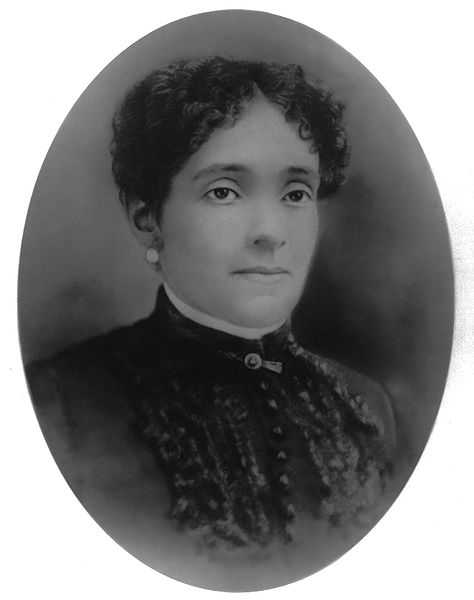
Eliza Simmons Bryant.

Image

ELIZA SIMMONS BRYANT (1827–1907) founded a home in Cleveland, Ohio, for elderly African-Americans, many, freed slaves.  The Cleveland Home for Aged Colored People, now known as Eliza Bryant Village, continues to serve some of Cleveland’s most vulnerable residents.

Eliza Bryant’s official biography asserts that she “was born in North Carolina to Polly Simmons, a slave, and her master. She was raised on a plantation in Wayne County. In 1848, Polly Simmons was freed, and moved with her family to Cleveland, Ohio, where she purchased a home, with funds from her master.” In fact, Eliza was born free to Polly Simmons, who was part of a large family whose freedom dated from at least the mid-18th century.  Her father may have been white, and may have employed her mother, but was not her master.  (Eliza turned 21 in about 1848 — was a release from an indenture the “freedom” attributed to her mother in her bio?) The 1850 census of the South Side of the Neuse, Wayne County, shows: Polly Simmons, 47, her children Eliza, 23, Buckner, 21, and George, 18; plus Nancy A., 17, and Willie Grice, 15, and Rufus Daniel, 14; all described as mulatto. They are listed among a cluster of Simmonses, including 84 year-old Phereby Simmons, who may have been Polly’s mother.

Photo courtesy of http://www.elizabryant.org.  Wikipedia; US Federal Population Schedule.

Unlawfully did migrate.

State vs William Mayhoe, Sophy Mayhoe, Theophilus Cyprus, Armen Cyprus, Mary Cyprus and Anthony Seward.  Indictment Missdemeanor.  Witnesses Stephen H. Turner, Austin Newman, H.R. Moss

State of North Carolina, Warren County    } Court of Pleas and Quarter Sessions August Term 1858.  The jurors for the State upon their oaths present that William Mayhoe, Sophy Mayhoe, Theophilus Cyprus, Armen Cyprus, Mary Cyprus and Anthony Seward, all free negroes late of the county of Warren, on the first day of June AD 1856, at and in the county aforesaid, unlawfully did migrate into the State of North Carolina and that the said William Mayhoe, Sophy Mayhoe, Theophilus Cyprus, Armen Cyprus, Mary Cyprus and Anthony Seward, from that day up to the day of the finding of this inquisition have continued to remain in the county and State aforesaid Contrary to the form of the Statute in such case made and provided and against the peace and dignity of the State.

Miscellaneous Records, Warren County Records, North Carolina State Archives. 

In the 1850 census of Nutbush, Warren County, Sophia Mayho, 30, is listed in the household of Edward Harris, 38, blacksmith; wife Mary, 35; and children Francis, 9, James, 7, Mary, 5, and John, 2; plus Jesse Gains, 65, blacksmith.

In the 1850 census of Nutbush, Granville County: Theodore Cypress, 36, ditcher, headed a household that included Arma Cypress, 40, and Ann, 19, Robert, 16, William, 15, and Mary Kearsey, 12.

Lucy sues for all.

Thomas v. Palmer, 54 US 249 (1854).

Nathiniel P. Thomas of Caswell County, among other things, devised and bequeathed as follows:

“My mill tract of land, situate in Caswell county, containing eighty-five acres, on the waters of Pumpkin Creek, adjoining the lands of Carter Powell, and others, and the Crowder tract of land, containing about sixty-six acres, adjoining the same. I do hereby devise to my executor, to be sold on a liberal credit, and the proceeds of the said sale to be placed at interest, after investing a portion of the same in purchasing a suitable home for my mulatto woman, Lucy, and children, purchased of the trustees of Robert A. Crowder; the interest in the said two tracts to be appropriated towards their support, and until the amount of said sale becomes due, I direct my executor to appropriate a sufficient amount out of the proceeds of my estate generally, for their maintainance and support.

3rd. My mulatto woman, Lucy, as aforesaid, I do hereby devise and bequeath, to Nathaniel J. Palmer, together with her children, Mary Jane, James and Newton, and any other children that she may have, in trust and confidence, nevertheless, that he will provide for them a suitable home, as aforesaid, and for her support, and that of her children, until they are able to support themselves, out of the proceeds of the real estate aforesaid. And in the event of the death of the said Nathaniel J. Palmer, the said woman, and children are to be held by my friend, William Bryant, of Pittsylvania county, Virginia, as trustee aforesaid, and in the event of his death, they are to be held by such trustee as he may select, and the County Court of Caswell approve and appoint, it being understood that the said woman and children are not to be removed from the county of Caswell, without her free will and consent, and a copy of this will recorded in the clerk’s office of the county, to which she may remove.”

In a codicil to this will, Thomas provided: “In the event that the laws of North Carolina, or the policy of the same, as construed by the Supreme Court, shall present any obstacle to the fulfillment of the trust mentioned in the foregoing will in relation to my mulatto woman, Lucy, and her children, I do hereby authorise and direct my executor, to send them to such State, territory or country as she may select, and he may think best, and I do hereby charge my estate with a sum sufficient to provide for their removal to such State, territory, and country, and for their comfortable settlement there; it being my will and desire, that she shall not be continued in slavery.”

When Lucy was advised that North Carolina’s laws forbade her to remain in the State and obtain any of the advantages proposed in Thomas’ will or codicil, she moved with her children to Ohio.

In her suit, Lucy Thomas and her children alleged that they were able to get to Ohio, but had not been provided with a home or settlement as the will directed, and “that they are in want, and destitution, and that the children being small, the mother is unable to support herself and them, without the assistance of the fund provided in the will.” They argued that the codicil of the will validated the provision made for them in the will and that they are entitled to the proceeds of the sale of the two tracts of land, which amounts to some $1,500; to the expenses of their removal; and to a comfortable settlement out of the Thomas’ estate.

Palmer, the executor, objected to this construction, arguing that there is nothing in the codicil to validate the deficient and illegal devises in the body of the will, and the plaintiffs are not entitled to any thing but the expenses of their removal and a comfortable settlement in Ohio.  He asserted that he had already advanced funds to them to assist their move, and as soon as the condition of the estate allowed, would provide for their comfortable settlement.

The Supreme Court determined: “Emancipation is not forbidden by our laws; but a negro, who is set free, is required forthwith to leave the State; for it is against public policy to have the number of free negroes increased, or to allow negroes to remain among us in a qualified state of slavery. … It follows that the provision in the will by which Lucy and her children were to remain in this State under the care and protection of one, who was to act nominally as master, but was to provide a house for them to live in, and apply the interest of a certain fund for their support and maintenance, so as to let them have the control of their own time, is void. Fortunately for the complainants, the testator became aware of this in time to make provision by a codicil for their emancipation and removal to another country….”

The complainants insisted, in error, that the codicil had the further effect of making valid the provision that is made for them in the will, and that they were entitled to the provisions of both.  “In other words, that besides having the expenses of their removal and comfortable settlement in another country paid out of the estate of the testator, they are entitled to the fund produced by the sale of the two tracts of land. We do not think so.”

The provision made by the codicil was intended as a substitute for the provision made by the will in the event that the will could not be carried out. “The intention is clearly this: If the negroes can be kept in this State, they are to be provided for as directed by the will. If they cannot remain here and be so provided for; then, they are to be provided for as directed by the codicil. There is not the slightest intimation that the two modes of providing for them are in any degree, or to any extent, to be cumulative.”

In the 1860 census of Ward 6, Cleveland, Cuyahoga County, Ohio: Lucy Thomas, 35, nurse, daughter Mary J., 14, and Lucy B. Hill, 25.  The Thomases were born in North Carolina, and Hill in England.  No color designation was marked.
Sold for taxes.

RUNAWAY from the subscriber on Saturday night, the 28th of April, a free negro boy calling himself BRYANT OXYDIM.  He was sold in February last at Sheriff’s sale for his taxes, until December next for which time I purchased him.  For the last two or three years he has been living about Watkinsville.  Bryant is about 28 or 30 years of age; about 5 ½ feet high; dark mulatto; spare made; limps slightly in his left leg when walking; his eyes being set very close cause him to appear cross-eyed.  He carried several suits of clothing, made mostly of cheap goods.

Any information respecting him will be thankfully received, and a fair compensation made for arresting him.  It is probable he will make his way to Jasper county, as he came from there.  He was born in North Carolina, and came to Georgia, when very young.  Athens, May 3, 1849.  W.S. Hemphill.

Southern Whig, Athens, Georgia, May __, 1849.

Free-Issue Death Certificates: NC-born Michiganders, no. 4.

Sarah E. Scipio.  Died 5 Sept 1912, Boyne City, Charlevoix County, Michigan.  Colored. Widowed. Born 27 March 1845 in NC to Daniel Oxendine and Elizabeth Morgan, both of NC. Buried Wilson Cemetery #1. Informant, N. Moran, Boyne City.

William Scott.  Died 4 Jul 1885, Calvin, Cass County, Michigan. Age 71. Mulatto. Married. Farmer. Born in NC to Alexander Scott and Betsey Scott.

Dica Scott.  Died 4 April 1885, Calvin, Cass County, Michigan. Mulatto.  Married. Born in NC to William and Sally Haithcock.

In the 1860 census of Calvin, Cass County, Michigan: William Scott, 44, wife Disa, 35, and children Anne C., 11, Saml., 13, plus Louisa Wade, 3, D.C. Gumbo, 8, and Sally Tabron, 64. William, Disa, D.C. and Sally were born in NC; Ann and Samuel in Ohio; and Louisa in Michigan.

Louis Gilford Scott.  Died 4 June 1899, Lawrence, Van Buren County, Michigan. Married. Black. Parent of 6 children; 2 living. Age 75 years, 10 months, 2 days. Farmer. Born in NC to Robert Scott of Virginia and Amey Scott of NC.  Buried Hicks cemetery.

Charity Taylor.  Died 16 Apr 1891, Cheshire, Allegan County, Michigan. Mulatto. Married. Age 63. Born NC to Wiley and Sarah Jones.

In the 1870 census, of Cheshire, Allegan County, Michigan: Kingsbury Taylor, 52, wife Charity, 42, and daughter Sarah A., 22. Kingsbury and Charity were born in NC; Sarah, in Indiana.

Catharine Wilson.  Died 15 April 1885, Calvin, Cass County, Michigan.  Black Married. Age 37. Born NC to Neal and Jennie Hunt.

He says that he is free, but cannot make it appear.

NOTICE.  There is in the common jail in Jones County, N.C., a negro man aged about 20 years, dark copper color, about 150 pounds, says his name is JOHN CARY, and came from Princess Anne county, Va., to Gates county, N.C., and worked with Nathan Parker for some time, then went to Craven county and worked on the Atlantic and N.C. R.R., then to Jones county. He says that he is free, but cannot make it appear, and also he is indicted as a free negro for migrating into the State.  The owner is notified to come forward, prove property, pay charges, and take him away, or he will be dealt with according to law.   J.H. NETHERCUTT, Sheriff.  May 15, 1860.

Weekly Standard, Raleigh, 16 May 1860.

He had no right to come back.

The Wadesboro’ Argus tells of a free negro who lived in Wadesboro’, and removed to Ohio; but soon found he could not live as well there as in North Carolina, and came back.

If this negro staid out of the State 90 days he had no right to come back, according to law.  We hope there has been no neglect of the law in this matter, on the part of the proper officers. No free negro is allowed by law to come into this State.  Any person who brings one in as an emigrant, either by land or water, is liable to a fine of $500.

We notice this case in order to arouse the attention of the officers of the law.  – North Carolinian.

Carolina Watchman, Salisbury, 10 Oct 1850.