Fourth Generation Inclusive

Historical Documents of Genealogical Interest to Researchers of North Carolina's Free People of Color

Category: Skilled Trades

Dave Dickinson.

Dave Dickinson or Dickerson (ca. 1790-after 1850) was a black plasterer and bricklayer active in the Albemarle region in the early 19th century who spent much of his life as an enslaved artisan but was manumitted late in his life. He worked for a planter clientele wealthy enough to build houses with plastered walls. Because of the records kept by these clients and their use of Dickinson’s full name (rather than just a first name as was the case for many enslaved artisans), an unusual amount of his work is documented. There are numerous references to artisans named Dave and Davy, Dickinson and Dickerson, probably referring to the same man but possibly to two different men.

“The first references to Dave Dickinson appear in the memorandum books kept by planter James C. Johnston when he was building his Hayes Plantation House near Edenton. Johnston recorded many payments to workmen, usually by name and only rarely by task, and did not generally distinguish between enslaved and free workmen. Among Johnston’s payments to artisans are those to Dave Dickinson in 1816 and 1817, some as small sums, others as ‘wages’ of $30 and more. Johnston did not identify Dickinson’s trade, but he may have been involved in plastering. During the spring and summer of 1817, Dickinson was at work along with Benjamin French, a plasterer who had come from New York to execute the refined plasterwork at Hayes.

“A plasterer named Dave Dickerson — probably the same man — was mentioned by Chowan County planter Clement Blount in 1837. Blount and his cousin Ebenezer Pettigrew of Tyrrell County were both in need of plasterers. Blount wrote to Pettigrew on June 6, 1837, that he had obtained ‘the promise of Dave Dickerson to go on the 15th July if nothing turns up to prevent him. I think he is industrious and will do the work well.’ In the meantime, Blount was looking out for another plasterer. ‘The fellow Jack Moody [?] I was telling you of I did not know who had the control of him, I have since been informed the Brandy bottle controls him.’ Two months later, Blount had had no success. While waiting to see if Dickerson had finished ‘Mr. [James?] Johnston’s work,’ Blount visited Johnston’s house ‘to see if he was done, and he has not done one stroke of work there yet and has gone to Washington County to Plaster a House for Mr. Harrison at Lees Mills, which is treating you and myself very ill.’ (Blount decided to employ another plasterer, Benjamin Balfour.) In a time when skilled artisans were scarce, even such wealthy and influential men as Blount and Pettigrew were often at the mercy of workmen such as Dickinson, who served a far-flung planter clientele according to his own schedule.

“Dave Dickinson was evidently enslaved for most of his life, but operated almost as a free man. An intriguing entry in the United States census of 1840 listed in Edenton one David Dickinson who, according to the check marks on the census form, was head of a household that included no free people, white or of color, but four slaves — the total number of people cited for the household. Three members of the household were occupied in manufacturing or a trade. It is possible though unusual that the census taker might list a slave household in this way, perhaps thus identifying the household of a well known person living essentially as a free man. (There are also a few other heads of households listed in Edenton in the same census in which no free persons are included, and the total number of household members is the same as the number of enslaved people. Whether these listings were errors or actually represented households of enslaved persons is unknown.)

“In 1846, Joseph D. Bond of Chowan County petitioned for the emancipation of ‘a negro slave known by the name of Davy Dickinson,’ who was then aged 50 and had maintained a good character and given meritorious service. The court granted the petition in 1847. The United States Census of 1850 listed in Edenton a free black bricklayer named Davy Dickerson, aged 60, owner of $200 worth of real property, and with no family members listed as free people. (He may have been living alone or may have had a family who were still enslaved). How long he lived as a free man or who his family members were is not yet known.”

Author: Catherine W. Bishir.  Published 2009.

As published in North Carolina Architects and Builders: A Biographical Dictionary,  http://ncarchitects.lib.ncsu.edu  (All rights retained.) This web site is a growing reference work that contains brief biographical accounts, building lists, and bibliographical information about architects, builders, and other artisans who planned and built North Carolina’s architecture.  
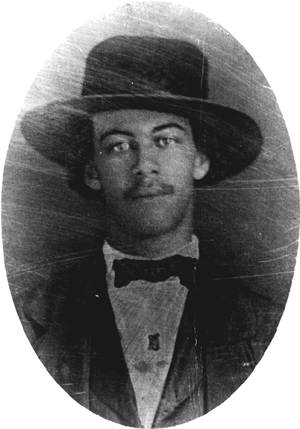
“Floyd, you must be a damned rascal.”

State v. James N. Floyd, 51 NC 392 (1859).

James N. Floyd was indicted for the murder of Richard Martin, a free man of color, in Gaston County, and the case was removed to Mecklenburg County.

David McCullough testified that he went to Martin’s blacksmith shop about dusk on the evening of 17 December, 1858.  A few minutes later, Floyd came to the shop and remained talking with him and Martin in an apparently friendly manner.  The three men drank a dram of liquor each, and Floyd told Martin that he wanted something to eat.  Martin pointed to a piece of meat hanging up in the shop, told the prisoner to cut some of the meat, and handed him a knife.  Floyd cut off a piece of the meat and broiled on the coals of shop hearth. Martin took two biscuits from a box and gave one to McCullough and one to Floyd.  About a half hour later, Martin asked Floyd for his knife.  Floyd claimed that he did not have it, and Martin replied that he had given it to him to cut the meat, and Floyd had not returned it.  Floyd denied again that he had the knife, and the two quarreled angrily for half an hour.  Martin said, “Floyd, you must be a damned rascal, for you have got my knife and won’t give it to me.” Nothing  more was said for about five minutes, when Martin remarked, “damn the knife, I don’t care anything for it, no how.”  Another five minutes passed, then five minutes more.  McCullough got into his buggy, and Floyd on his horse and, when they got 50-75 yards away, Martin came out of his shop and said, “in a mild, friendly tone,” “I’ll give McCullough a dram, but I won’t give Floyd any.”  McCullough reigned up his horse and stopped, and Floyd turned his horse across the road.  Martin handed McCullough a small glass bottle, from which he took a drink and handed it back to him.  Martin then went up to Floyd and extended the bottle towards him.  Floyd immediately got off his horse, and, without a word, the two began to fight.  McCullough tried to reach them, but when he was about ten steps from them, he saw Martin fall on his back.  In a few minutes, he was dead.  Floyd rested with his hands on a fence for a few minutes, then rode off.  This took place about 10 o’clock on a bright moon-lit night.

Martin’s body was found about one hour after he died.  He had six wounds, three on the top of the right shoulder “from which blood was running next morning;” another on the right side extending into the stomach; a deep fifth one on the outside of the thigh; and a sixth a little to the right of the center of his body, ranging from the right to left, passing through the lungs and nearly through his body.  A large bowie knife belonging to Floyd was found near Martin’s body, covered with blood nearly up to the hilt.

Witness Costner stated that, “about two hours by the sun,” he saw Floyd at Neagle’s store, about half a mile from Martin two’s blacksmith shop. As Costner started for home, Floyd told him not to leave because that he (Floyd) might need friends that evening.  A short time later, Floyd repeated the same comment as he pulled out a bowie knife.  (The knife proved to be the one found at the scene of the homicide.) Costner asked Floyd if he would sell the knife, he said no, he expected to have a use for it that evening. He also said he had bought it in Yorkville for ten dollars.

Floyd’s nephew, who lived with him in York district, South Carolina, testified that on the morning after the homicide, he saw a wound on Floyd’s forehead, near the eyebrow, about an inch and a half long, and two or three wounds on the top of his head. In addition, Floyd’s right thumb was either broken or disjointed.

Other witnesses swore that there was a lot of blood at the murder scene, and a stone weighing almost three pounds was found about five feet from Martin’s body.  There was blood and hair and something like skin on it.  The bowie knife was also found, and its blade had two gaps in it, which were not there when Costner and Neagle saw it.

The Gaston County sheriff testified that he asked Floyd how he got the wound over his eye, and Floyd said, “I reckon I did it with my own knife; or I did it with my own knife; they say I had a fight with Dick Martin and killed him, but I know nothing about that.”

Floyd’s counsel offered testimony to prove Martin’s temper and disposition for violence, but the Court ruled to exclude it, and they filed exceptions.

The Court explained to the jury the difference between murder, manslaughter, and excusable homicide and charged, that if Martin had assaulted Floyd, with a stone, bottle, or in any other way, or had attempted to pull him from his horse, and they immediately got into a mutual combat, and during the fight Floyd killed Martin, he could not be convicted of murder, but only manslaughter only. However, “the law would excuse no one for killing another, unless there was an absolute necessity for so doing to save his own life from destruction, or to prevent great bodily harm.”  So, if the jury found that Martin had not assaulted Floyd before Floyd stabbed him to death, then Floyd was guilty of murder, even if Martin had used “offensive language” toward Floyd in the shop and as he approached him with the bottle.  Floyd’s counsel excepted to these instructions.

The jury found the defendant guilty of murder. Floyd appealed, and the Supreme Court ruled that the lower court had erred by barring evidence of Martin’s reputation. “It is error in a Judge, in a trial for murder, to make a hypothesis omitting the leading fact which goes to the exculpation of the accused. It seems that when it is necessary for the accused to account for the fact that he began a sudden mutual affray with the use of a deadly weapon, in order to repel the inference of malice arising from that fact, he may show that his adversary was a powerful, violent and dangerous man.”

He was in no battle, being a colored man.

Virginia, Powhatan County, to wit;

On this 15th day of June 1820, personally appeared in open court in the county court of Powhatan, in the state aforesaid, being a court of record, Reuben Bird, aged about fifty six years, according to the best estimate that can be made, who being first duly sworn according to law, doth on his oath make the following declaration in order to obtain the provision made by the acts of Congress of the 18th March 1818 and the 1st May 1820, that he, the said Reuben Bird enlisted for and during the war of the American Revolution in April or May in the year 1780 in Hillsborough in North Carolina in the Company commanded by Captain James Gunn in the Regiment of Dragoons commanded by Col’o White of Virginia; that he continued to serve in the said Corps until the peace came, when he was discharged from service in Culpepper county, in the state of Virginia: that he was in no battle, he being a colored man, and kept as a Bowman, although he was very near the ground where several were fought; and that he has no other evidence now in his power of his said services except the certificates of Benjamin Sublett and Larkin Self herewith exhibited:

And in pursuance of the act of the 1st of may 1820, the said Reuben Bird solemnly made oath that he was a resident citizen of the United States on the 18th of March One thousand eight hundred and eighteen, and that he has not since that time, by gift, sale, or in any manner disposed of his property, or any part thereof, with intent thereby to diminish it as to bring himself within the provision of an act of Congress, entitled “An act to provide for certain persons engaged in the land and naval service of the United States in the Revolutionary War,” passed on the 18th day of March One thousand eight hundred and eighteen, and that he has not, nor has any person in trust for him, any property or securities, contracts, or debts due to him; nor has he any income, other than what is contained in the Schedule hereto annexed, and by him subscribed to wit: Real and personal property, none; he is by trade a Bricklayer, and is not very able to pursue his trade in consequence of a Rupture, which obliges him to wear a Truss of Steel; his family consists of his wife, who is about 37 years old, and one child, a female about seven years old; his wife is healthy, and by her industry somewhat contributes to support the family.  Reuben X Bird.

From the file of Reuben Bird, Revolutionary War Pension and Bounty-Land Warrant Application Files, National Archives and Records Administration.

In the attached affidavit, Benjamin Sublett swore that he was a sergeant in Captain William Mayo’s company at the time of General Gates’ defeat at Camden, South Carolina, and “in the same company a mulatto boy appeared to be about the age of 16 or 17 years by the name of Reuben Bird,” who enlisted at “Hilsbury” in about May 1780.

James Boon.

James Boon (1808-1850s or later) was a free black carpenter active in North Carolina from the 1820s through the 1850s. As historian John Hope Franklin relates, the rare if not unique survival of the personal papers of this free black artisan provides an important window into the ‘common experiences, the fortunes, both good and ill, which all free Negroes had.’ Boon was evidently born to a free mother and was apprenticed at 18 to Franklin County carpenter William Jones until the age of 21. In 1829, he received a paper that served as a pass, stating ‘James Boon, a boy of colour who was bound to William Jones by this court’ was ‘ordered to be liberated and set free.’

“Boon led a mobile life and carried with him passes and letters of reference from employers and prominent citizens to affirm his free status and good work. He worked first around Louisburg in construction and furniture making. In the mid-1830s, he went to Raleigh, possibly to help build the Duncan Cameron House (1835-1836). He traveled to Littleton in 1839 and to rural Halifax County in 1842. A reference to ‘Boon’ in Skinner family correspondence suggests that he worked on the Greek Revival style plantation house Linden Hall (1841-1844) near Littleton for Charles and Susan Little Skinner; there are also references to ‘Mr. Bragg’ (probably Thomas Bragg, Sr.) and ‘Jones’ (possibly Albert Gamaliel Jones). One of his employers, R. H. Mosby, affirmed in 1842 that Boon was ‘an orderly and well behaved man, and attentive to his business. His work is executed better and with more taste than any persons within my knowledge in this section of country.’ In 1848, James Boon joined his brothers and a friend seeking work in Wilmington. He then went to Raleigh in 1849, where he was employed by the prominent builder Dabney Cosby on various projects. There he hired other workmen to help on ‘Mr. D. Cosby’s work.’ On October 27, 1850, Cosby wrote him a reference stating that ‘Jim Boon’ had been in his employ ‘for some time’ and was ‘a good workman.’

“Boon sometimes worked alone but also hired as many as nine workmen, including whites, slaves, and free blacks. He charged $1.25 a day for his own time and $0.50 cents to $1.00 for his employees. He owned one slave, Lewis, and land in Franklin County, which he occasionally mortgaged. Boon did not learn to read and write, but William Jones, who remained a friend, helped him in business matters. Various receipts note payment for such jobs as ‘Mill House 30 by 36, Ten feet pitch, Two stories, three floors, 12 windows and ten doors, weatherboarding dressed plain strong work,’ or for a more finished project, ‘24 lights glass, 12 x 15, Pilasters rose blocks–inside double architraves.’

“James Boon’s family included a brother, Carter Evans. Boon’s first wife was Sarah, a literate slave who belonged to Maria Stallings. They had a son who went to Raleigh with his father in 1849. (James Boon does not appear in the 1850 census.) In 1854, Boon married Mahaly Buffalo in Raleigh. His last record was in 1857; his death date is unknown.”

Author: Catherine W. Bishir.  Published 2009.

As published in North Carolina Architects and Builders: A Biographical Dictionary,  http://ncarchitects.lib.ncsu.edu  (All rights retained.) This web site is a growing reference work that contains brief biographical accounts, building lists, and bibliographical information about architects, builders, and other artisans who planned and built North Carolina’s architecture.  

Donum Montford.

Donum Montford (Mumford) (1771-1838), New Bern brickmason, plasterer, and brickmaker, was prominent among the city’s early 19th century builders and became one of the wealthiest of the city’s free people of color. Memoirist Stephen Miller recalled that he was ‘copper-colored, and carried on the bricklaying and plastering business with slaves, a number of whom he owned. Whenever a job was to be done expeditiously, he was apt to be employed, as he could always throw upon it a force sufficient for its rapid execution.’

“Born a slave, Montford was owned by the prominent Richard Cogdell family until 1804. During his more than 30 years as a slave, he mastered the related trades of bricklaying, plastering, and brickmaking. He gained his freedom in 1804, when the widow Lydia Cogdell and her daughter Lydia Cogdell Badger sold him to the wealthy free man of color John C. Stanly, who emancipated him the next day, doubtless carrying out a strategy planned by all parties. As a free man, Montford promptly established his shop and began acquiring property. Although he was illiterate, signing documents with his mark, he was successful in his business. In 1806 his former owner, Lydia Cogdell, gave him a young slave, Abram Moody Russell, to train as an apprentice, then to emancipate upon his maturity; Abram Moody Russell Allen, as he was later known, was identified by Montford as his nephew and also became his heir and executor. In 1807 Montford took the first of many free apprentices to his trade. In 1809 he married Hannah Bowers. By 1811 he was purchasing real estate, and he eventually owned several town lots and houses, plus a farm. By 1820, according to the United States Census, Montford was head of a large household of free people of color, and had twenty-two slaves in his employ; whether he owned all of these is not certain. In 1827 Montford petitioned to emancipate his only child, Nelson, a plasterer who had worked with Montford until he attained his majority.

“Both Hannah and Donum Montford were members of Christ Episcopal Church in New Bern, and their burial services were recorded in the parish register noting them each as a ‘colored communicant.’ Montford’s stature in the community was indicated by his appointment to a committee, along with the leading white brickmasons in town, Bennett Flanner and Joshua Mitchell, to inspect repairs to Christ Church in 1832. He was regularly employed to work on public buildings. Along with taking free apprentices to his trade, he also trained slave artisans, such as Ulysses, ‘a plasterer by trade, who served his time with Donum Mumford, in the town of New Bern afterwards worked at his business upwards of four years, in Hyde County,’ and who could ‘read and write tolerably well.’ Ulysses had run away from William S. Sparrow, who advertised for his return in 1818.

“Despite his long and active career, few of Montford’s projects have been identified. For the Craven County Jail (1821-1825), a handsome and formal civic building, detailed construction records show his versatility. Montford supplied 100,000 of the roughly 400,000 bricks, at $5 per thousand, and he and his workers accomplished the lathing and plastering, including laborers (probably slaves) Charles, Edmond, and Romey at 5 shillings a day, and skilled workers Tony and Lawson at $1 a day. He typically charged 12 shillings and sixpence per day for his own work and a few other skilled men in his shop. Montford also supplied many of the bricks for the John R. Donnell House (1816-1818), which was among the finest of the city’s Federal style, brick townhouses, where Wallace Moore was the chief brickmason and Asa King was the lead carpenter. Montford also did some work beyond New Bern, including an unnamed project for Tyrrell County planter Ebenezer Pettigrew, who paid him in 1819 for delivering bricks and lime, building the foundation for a smokehouse, and mending plaster.

“At his death in 1838 Montford had a considerable estate in land, slaves, and personal possessions. Illustrating accounts of the prosperity and gentility of New Bern’s leading people of color, he left to his wife, Hannah, such household furnishings as a secretary, a sofa, a mahogany candle stand, a dining table, and a breakfast table; numerous serving pieces, including two dozen plates of Liverpool ware, silver teaspoons and tablespoons, decanters and wine glasses, and two oyster dishes; and two pictures, one of Napoleon, and one of Christ on the Cross. Among the many items sold from his estate were a musket and a shotgun, window sash, brick moulds, shad nets, and farm implements. His estate also included slaves Bob, Dick, Jim Carney, Dinah, Alexander, and plasterer-bricklayer Isaac Rue (Rew). Montford stated in his will that Isaac was to be freed after Hannah’s death; Isaac Rue continued to practice his trade for many years as a free man and a property owner.”

Author: Catherine W. Bishir.  Published 2009.

As published in North Carolina Architects and Builders: A Biographical Dictionary,  http://ncarchitects.lib.ncsu.edu  (All rights retained.) This web site is a growing reference work that contains brief biographical accounts, building lists, and bibliographical information about architects, builders, and other artisans who planned and built North Carolina’s architecture.  

Thomas Sheridan.

Thomas Sheridan (ca. 1787-1864) was an emancipated mulatto carpenter active in Bladen County during the antebellum period, whose only documented building is the Brown Marsh Presbyterian Church (1828) in that county.

“Thomas Sheridan’s family background illustrates the complexities of race and status in his era. Probably born in Bladen County, he may have been the son of Nancy Sheridan (a woman of color who was emancipated after his birth) and Joseph R. Gautier, a wealthy Bladen County planter and merchant of French Huguenot background. Gautier, who was frequently listed among the leading men of the Cape Fear region, was a political figure in Elizabethtown, a state senator (1791), and an early supporter of the University of North Carolina noted for having left his library of some 100 volumes (mostly in French) to the university’s library. Gautier was the owner of several slaves, including Thomas Sheridan and his brother Louis Sheridan, and probably Nancy Sheridan. Circumstantial evidence also indicates that Joseph Gautier and Nancy Sheridan had a long-term domestic relationship: many white men who had such relationships with their enslaved women often freed their enslaved family members and provided for them (although emancipation became increasingly difficult in the early and mid-19th century).

“In 1799, Joseph Gautier of Elizabethtown petitioned the North Carolina General Assembly to emancipate “two mulatto boys belonging to him.” Gautier explained that, “as their childhood would render fruitless a recourse to the county court, he prays the aid at the Legislature to establish by a law the freedom of said boys.” (Laws governing emancipation by county courts required demonstration of meritorious service, which a child could not have earned; thus Gautier appealed to the legislature. No matter what the status of the father, a child born to an enslaved mother was born a slave.) Gautier’s petition succeeded, and the legislature enacted a law that “the said mulatto boys be emancipated and set free from slavery, and henceforward be called and known by the names of Thomas Sheridan and Louis Sheridan.” In 1799, Thomas was about twelve years of age and Louis was about six. In the 1800 census of Bladen County, J. R. Gautier was listed as head of household with one white male, three “other” free persons–probably Nancy, Thomas, and Louis–and seven slaves. His will of 1800 left his plantation “at the marsh,” his household and plantation utensils, and five slaves to Nancy Sheridan, “my emancipated black woman” (suggesting that he himself had freed her, though no record has been found). He left three slaves to “her child” Louis Sheridan, a small amount of property to his (presumably white) nephew, Joseph Gautier, Jr., and £500 to Thomas Sheridan, no relationship specified. The terms of the will make it uncertain as to whether Thomas as well as Louis Sheridan was the son of Nancy Sheridan: Thomas might have been the son of Gautier with another woman, or even of Nancy and another father. In any case, Gautier freed and provided for young Thomas. Gautier died in 1807.

“Louis Sheridan (ca. 1793-1844), probably Thomas’s brother or half-brother, gained a good education and became an important merchant and large property owner in Elizabethtown with business connections throughout the state and even the nation. He owned as many as sixteen slaves. He also acquired many town lots in Elizabethtown, including those he sold as sites for the courthouse and for the Presbyterian and Methodist churches. Probably because of his father’s position and connections, Sheridan was aided by former governor John Owen and other leading men of the region and traveled widely for business to Philadelphia, New York, and elsewhere. Although he had initially opposed colonization, after the state placed tighter restrictions on free people of color in the 1830s, Louis Sheridan joined the Liberian colonization movement. He sold his slaves and moved with his family to Liberia in 1837, where he found a situation far less rosy than he anticipated and wrote (often negative) reports back to the United States. He remained there nevertheless and died there in 1844.

“Thomas Sheridan pursued the carpentry trade and remained in Bladen County. Although he doubtless built other structures, he is remembered chiefly as builder of Brown Marsh Presbyterian Church. The plainly finished, weatherboarded building is one of the few intact examples still standing of the state’s once numerous simple frame churches. A board in the church ceiling retains the chalked signature, “Thos. Sheridan,” and the date, probably 1828, possibly 1818. Within several years, in 1834, the Presbyterians in the county seat of Elizabethtown built a more substantial church on land deeded to the congregation by Louis Sheridan. Possibly the congregation employed Thomas Sheridan to build it, but this is not documented.

“According to the United States census of 1850, unlike his brother Thomas Sheridan did not become wealthy. He was listed as a mulatto carpenter, aged 62, with $30 worth of real estate. He headed a household that included his wife Agnes and their adult daughter, Martha. They lived in a rural neighborhood among primarily white farmers, plus a few other free artisans of color. In 1851 Sheridan remarried, to Lucy Oxendine of Robeson County, of a large Native American family. In 1860, Thomas Sheridan was listed as a farmer with a farm worth $200 and personal property worth $170, with his wife Lucy, aged 55. In his will of 1863 (probated in 1864), Sheridan left his farm, livestock, and household goods to his wife, then to his daughter Martha. He specified that his gun (for which in most areas a man of color had to obtain a special license) and his carpentry tools should be sold to pay for his funeral; and he left the lumber in his shop “to make my coffin.”

Author: Catherine W. Bishir. Published 2009.

As published in North Carolina Architects and Builders: A Biographical Dictionary,  http://ncarchitects.lib.ncsu.edu  (All rights retained.) This web site is a growing reference work that contains brief biographical accounts, building lists, and bibliographical information about architects, builders, and other artisans who planned and built North Carolina’s architecture.  

Lewis Sheridan Leary.

Image

Lewis Sheridan Leary (1835–1859), a harnessmaker from Oberlin, Ohio, joined John Brown’s unsuccessful raid on Harpers Ferry, where he was killed.  Leary was born in Fayetteville, North Carolina, to Matthew N. Leary, also a harnessmaker, and Julia Memril Leary.  His paternal grandfather was an Irishman, Jeremiah O’Leary, who fought in the American Revolution under General Nathanael Greene. A paternal great-grandparent, Abram Revels, a free man of color, was also a Revolutionary War veteran. His mother’s grandmother was “French Mary,” a freed West Indian who was a well-regarded cook in Fayetteville.

In the mid-1850s, Leary moved to Oberlin, Ohio, where two of his sisters had settled. One sister, Sarah, had married Henry Evans, whose sister Delilah Evans Copeland, the mother of John A. Copeland Jr., another John Brown follower.  Leary married Oberlin College graduate Mary Patterson, and had a daughter, Louise.  Leary became involved with abolitionists in Oberlin, which had an active community. Later, he met John Brown in Cleveland, Ohio.

In 1858, Leary joined in the Oberlin-Wellington Rescue, when fugitive slave John Price was forcibly taken from the custody of a U.S. Marshal to prevent his being returned to slavery . He was not among the 37 men (twelve of them free men of color) who were indicted and jailed for their actions.

Accompanied by Copeland, Leary joined John Brown at Chambersburg, Pennsylvania.  Leary died eight days after the attack on Harper’s Ferry from wounds suffered in the conflict. Copeland was captured, tried and later executed.

Leary’s family remained in Fayetteville during the Civil War.  During Reconstruction, his father and a brother served as city councilmen and county commissioners, and his brother Matthew Leary Jr. was an early trustee of the college that became Fayetteville State University. Leary’s youngest brother, John Sinclair Leary, graduated from Howard University in 1871 and was one of the earliest black attorneys admitted to the bar in North Carolina. He served in the state legislature for two terms as a Republican representative for Cumberland County during Reconstruction, and in 1884 was sent as a delegate to the National Republican Convention. He later founded and served as the first dean of the Shaw University Law School, and in the 1890s moved his family and practice to Charlotte. Today the Charlotte chapter of the North Carolina Association of Black Lawyers is named the John S. Leary Bar Association in his honor.

 Adapted from Tar Heels at Harper’s Ferry, October 16-18, 1859,”  http://www.nccivilwar150.com/history/john-brown-nc.htm, published by the North Carolina Department of Cultural Resources.

Photograph, c. 1850s, courtesy of Oberlin College Archives, Oberlin, Ohio.

In the 1860 census , Fayetteville, Cumberland: Matthew Leary, 48, wife Julia A., 42, Matthew, 17, Lewis S., 15, Julia A., 12, John S., and Mary E., 13.

Craven County Apprentices, 1802-1804.

On 14 June 1802, Isaiah Godett, a free person of color aged 1 year the 19 October next, was bound to George Godett as a shoemaker.

On 18 June 1802, William Carter, a free Negro boy aged 12 years, was bound to Asa Jones as a cooper.

On 18 June 1802, John Carter, a free person of color aged 6 years, was bound to Frederick Jones as a cooper.

On 11 June 1804, James Lewis, a free person of color aged 2 years, and Sall Lewis, a free person of color aged 5 years, were bound to Gideon Sparrow as a ship carpenter.

On 12 June 1804, Peg Duncan, a free person of colour aged 6 years, was bound to Noah Champion of the town of New Bern as a spinster.

On 14 June 1804, Jim Dove, a free person of colour [no age listed], bound to John C. Stanly as a barber. An endorsement on the back of the bond indicated “James Dove” was born 2 February 1794, was 10 years and 4 months old, and had 10 years and 8 months to serve.  On the same day, Elijah Dove, a free person of colour, was also bound to John C. Stanly, as a house carpenter.

On 15 June 1804, Israel Harris, free person of color aged 12 years, was bound to James Carney, Esq., as a cooper, and Rachel Harris, a free person of color aged 14 years, was bound to him as a spinster.

On 10 September 1804, Elisha Gregory, a free person of color aged 20 years, Macksey Gregory, a free person of color aged 18 years 6 months, and James Willouby, a free person of colour aged 15 years, were bound to John C. Stanly as house carpenters.

On 11 September 1804, Lizzy Driggers, aged about 15 years, and Ana Driggers, aged about 18 years, two free base born orphans of color, were bound to Thomas Mahon until 21 years as spinsters.

On 14 September 1804, Peter Braddock, a free person of color aged 17 years, was bound to John C. Stanly as a house carpenter.

On 15 December 1804, Rachel Donaldson, a free person of colour, was bound to Edward Pasteur as a spinster.

Edward Richardson.

Edward Richardson was born about 1830, part of families long established in New Bern and Craven County. He was the son of Simon Richardson and Sarah Rue (Rew), free people of color, who were married in Craven County in February 1830. His father’s family, the Richardsons, had been free people in Craven County for many years; several of them, including Simon Richardson, were engaged in the calker’s trade, which was essential in building and maintaining wooden boats and ships. On his mother’s side, Edward was the grandson of bricklayer and plasterer Isaac Rue (ca. 1787-1880). Isaac Rue had been emancipated by the will of the noted New Bern artisan Donum Montford, who was also an emancipated brickmason and plasterer. Edward Richardson probably learned his trade from his grandfather, along with his younger brother, Isaac Richardson, who was also a bricklayer.

“In 1860 and 1870, the bricklayer Edward Richardson owned real estate and personal property, and he and his wife Maria and their family were living next door to his grandfather Rue. At Rue’s death, the local New Bernian of January 17, 1880, reported that the elderly Isaac Rue had ‘acquired a considerable amount of property in real estate which is left to his grandson, E. A. Richardson, a faithful and obliging Clerk in our Post Office.’

“Although Richardson worked for most of his life as a bricklayer and plasterer, no specific projects have been attributed to him. Both before and after the Civil War, New Bernians constructed many brick buildings, as well as brick chimneys and foundations, and doubtless many of these showed Richardson’s handiwork.

“From the 1860s onward, Richardson was engaged in local political and civic life. In 1865 he was a delegate to the Freedmen’s Convention in Raleigh. Locally, he served on the local board of education, as justice of the peace, and as a founder and officer of a fire company and other civic organizations. By 1880 he was employed as clerk in the local post office, and in 1884-1885 held the important office of postmaster, an appointment made by Republican Congressman James O’Hara, whom Richardson had supported. At his death on February 26, 1896, the New Bern Weekly Journal reported, “E.A. Richardson, a prominent colored man died yesterday. The funeral will take place from St. Peter’s church this afternoon at two o’clock. He was well known to many of our city owing to his public position as postmaster and ‘bore a good name as far as we ever heard.'”

Author: Catherine W. Bishir. Contributor: John B. Green.  Published 2009.

As published in North Carolina Architects and Builders: A Biographical Dictionary,  http://ncarchitects.lib.ncsu.edu  (All rights retained.) This web site is a growing reference work that contains brief biographical accounts, building lists, and bibliographical information about architects, builders, and other artisans who planned and built North Carolina’s architecture.  

The 1850 census of New Berne, Craven County, shows Simon Richardson, 40, calker; wife Sarah, 38; and children Edward, 19, and Miles, 18, both plasterers; Eliza, 15; Isaac, 12; and Ann, 3; all described as black.  In the 1860 census of New Bern, Edward Richardson, 30, brickmason, heads his own household, which includes wife Mariah, 41, and children Samuel, 4, and Benie, 3.  They are listed next door to the household of Isaac T. Rue, 70, brickmason, his wife Phillis, 63, and probable grandson James Rue, 14.

Craven County Apprentices, 1800-1801.

On 10 March 1800, Samuel Willis, a free Negro aged 19 years, son of Dorcas Moore, was bound to Francis Lowthrop, Esq., as a mariner.

On 9 June 1800, Jean Louis Baptiste Harman, a free mulatto orphan aged 14 years, was bound to Thomas Marshall as a Merchant.

On 8 September 1800, David Moore, a free Negro boy aged 11 years, was bound to Ebenezer Slade as a cooper.

On 8 December 1800, David Moore, a free Negro boy aged 10 years, was bound to John Moore as a cooper.

On 10 March 1801, Jerry Powers, a Negro boy aged 18 years last December, was bound to Thomas Oliver, of New Bern, as a baker.

On 8 June 1801, Polly Hagle, a free mulatto girl aged 13 years in March last, was bound to Elizabeth Bartlett of New Bern as a spinster.

On 17 September 1801, Sally Henry, a free Negro girl aged 7 years, was bound to Richard Forbes, of New Bern, as a spinster.

On 17 September 1801, Rhoda Dove, a free person of color aged 13 years, was bound to William Dudley as a spinster.

On 17 September 1801, Ferebe Lewis, a free Negro girl aged [blank], was bound to Richard Forbes of New Bern, as a spinster.

On 14 December 1801, Ricor Carter, a free person of color aged 7 years, was bound to Abel Carter as a cooper, and Mary Carter, a free person of color aged 9 years, bound to Abel Carter as a spinster.

On 14 December 1801, Nancy Carter, a free person of color aged 8 years, was bound to Benjamin Mitchell as a spinster.

On 14 December 1801, John Carter, Leonard Carter and William Carter, free persons of color aged 7, 7 and 15 years, were bound to Isaac Perkins as a cooper. William Godett, a free person of color aged 12 years, was also bound that day to Isaac Perkins as a cooper.

On 14 December 1801, William Parker, orphan aged about 14 years, was bound to Jacob Cook, mariner of New Bern, as a mariner.

On 14 December 1801, Stephen Dove, free person of color aged 12 years, was bound to Frederick Jones as a cooper.

On 15 December 1801, Ezekiel Chance, “a certain person of colour” aged 4 years, was bound to John Jones, Esq., of New Bern, as a cooper.  On the same day, Proseply Chance, aged 6 years, and Betsy Chance, aged 2 years, were bound to John Jones, Esq., of New Bern, as spinsters.

On 15 December 1801, Hannah Carter, a free person of color aged 10 years, was bound to Abel Moore as a spinster.

On 15 December 1801, Nelly Lindsay, a free person of color aged 2 years, was bound to Thomas Lovick as a spinster.

On 16 December 1801, John Dove, a free person of color aged 12 years, was bound to William Jones as a cooper.

On 18 December 1801, James Lewis, a free person of color aged 11 years, was bound to Henry Butler, mariner of New Bern, as a mariner.