Fourth Generation Inclusive

Historical Documents of Genealogical Interest to Researchers of North Carolina's Free People of Color

Month: May, 2013

For the murder of Archibald Beebee.

MATTHEW N. LEARY, jr., a witness for the prosecution, having been first duly sworn, testified as follows:

Examined by the Counsel for the prosecution.

Q. What is your name? A. Matthew N. Leary, jr.  Q. Where do you reside? A. In Fayetteville. Q. What is your occupation in Fayetteville? A. Saddle and harness maker was previous to the war. Since the war I have added to that a small grocery in the same building. A. Have you been a free man all your life? A. All my life, sir.  Q. Where did you reside in the beginning of the year 1867? A. In Fayetteville. Q. Did you know one Archy Beebee there? A. I did, sir, by sight. I knew him when I saw him. Q. Where is he now? A. Dead. Q. When was he killed? A. On the 11th of February. … [p. 3]

ROBERT SIMMONS, a witness for the prosecution, having been first duly sworn, testified as follows:

What is your name? Robert Simmons. Where do you live? In Fayetteville, sir. What is your occupation there? I keep a grocery there. Was that your occupation at the beginning of the year? Yes, sir. Did you know Archy Beebee? Yes, sir. … [p. 47]

HENRY HAGANS, a witness for the prosecution, having been first duly sworn, testified as follows:

Examined by the Counsel for the prosecution.

Where did you live at the beginning of this year? In Fayetteville. What is your business there? Shoemaker. Whose shop did you work in, the first part of this year? I worked with Mr. Henry Sykes. Is that the one-armed man? Yes, sir. Did you know Archy Beebee? Yes, sir. … [p. 55]

Argument of ED. GRAHAM HAYWOOD:

… Here is Matthew N. Leary, jr., whose character is unassailed, and unassailable, who says – he was standing to the right of the man who fired the pistol, and his rear, about five feet. … Between Leary and the man who fired his pistol, stood Lewis Smith. Square behind [John] Armstrong – almost touching him – and within five feet or six feet of the man who fired the pistol, stood Henry Hagans; a little further to the front than James Douglass, and to his left stood Robert Simmons… [p.347]

Proceedings in the Case of the United States against Duncan G. McRae, William J. Tolar, David Watkins, Samuel Phillips and Thomas Powers, for the Murder of Archibald Beebee at Fayetteville, North Carolina on the 11th Day of February, 1867, together with the Argument of Ed. Graham Haywood, Special Judge Advocate (1867).

In the 1860 census of Fayetteville, Cumberland County: D. Simmons, 40, Robert, 23, Saml., 20, and Mary Simmons, 12.

In the 1860 census of Fayetteville, Cumberland County: Joseph Heggins, 51, laborer, wife Harriett, 31, and children Henry, 13, Duncan, 9, Lavina, 7, Sophia, 5, and Mary, 3.
Jeffreys, woodworkers.

Thomas Day—who was born in 1801 in Greensville County, Virginia, to mixed-race parents, John and Mourning Day—moved with his family to Warren County, North Carolina, in 1817. When he moved to Hillsborough in the early 1820s, it appears that he became friends with members of the Jeffreys family who, although listed as “mulattos” in official records, were actually of Indian origin. The Jeffreys were part of a larger group of Occaneechi people from Virginia who had settled in the northwest section of Orange County, which became Alamance County in 1849. As with the Day family, the Jeffreys family had originated in Greensville County, Virginia. In 1830 Uriah Jeffreys served as a bondsman for Thomas Day when he married Aquilla Wilson. A bondsman was usually a close family member (such as a father, brother, or uncle) who assured the court that the couple should be married, and that the groom would not change his mind and leave the bride at the altar. Uriah Jeffreys must have been a close friend of Thomas to agree to be his bondsman. Historic records make it clear that both men were cabinetmakers, and it is possible that Uriah and his brother Nathan worked with Day for a short time. In 1828 Uriah decided to move. He advertised in the Hillsborough Recorder that he had a variety of furniture from his cabinetmaking business for sale, including “Bureaus, Bedsteads, Tables.”

Uriah moved to Ohio with two of his brothers, Parker and Augustus. Unfortunately, they experienced the same type of prejudice in the North that they had tried to leave behind. The law required free blacks entering Ohio to pay a bond of $500 to county officials. Whites thought this would guarantee that only free blacks of “good character” would settle and be able to support themselves. Parker Jeffreys refused to pay, insisting that his blood was a mixture of Indian and white, and not black. The case went to the county court, where he lost. Jeffreys persevered, and the Ohio Supreme Court heard his case in 1842. In Parker Jeffreys v. Ankeny et al., the supreme court justices ruled that he was an Indian with no African ancestry and did not have to pay the bond. Members of the Jeffreys family continued to make furniture near Xenia, Ohio, well into the twentieth century.

Nathan Jeffreys lived the rest of his life in North Carolina. It seems that he continued to work as a journeyman cabinetmaker, because in 1834 he is listed as such in a court document. However, in the 1850 and 1860 censuses, he is listed as a farmer owning $500 in property. Many cabinetmakers supplemented their incomes by farming. Day clearly considered Nathan a close family friend, because in 1851 in a letter to his own daughter, Mary Ann, he mentions the death of Nathan’s daughter, Safroney.

Fine furniture made by Nathan Jeffreys between 1845 and 1855 is known to exist in a private collection. The construction techniques that he used are similar to those found on the bureaus made in Day’s Milton shop, indicating that the two men probably worked together at one time. Jeffreys and other members of the Indian community passed on their woodworking skills. His great-great-grandson, William Bill Jeffries, learned woodworking from his father. He built houses as well as chairs during most of the twentieth century.

Adapted from Dr. Patricia Phillips Marshall, “Indian Cabinetmakers in Piedmont North Carolina,” www.ncpedia.org

United States Colored Troops, no. 12.

14 H. Art’y. U.S.C.T. Hampton Reynolds. Co. A, 14 H. Art’y. U.S.C.T. Reg’t. appears on Company Descriptive Book of the organization named above. Description: age, 38 years; height, 6 feet 0 inches; complexion, black; eyes, black; hair, black; where born, Hertford County, NC; occupation, laborer. Enlistment: when, 2 Aug 1864; where, New Bern; by whom: W.H. Wrigley; term, 3 years. Remarks: Appointed Corp, July 25, ‘65.

38 U.S.C.T. Preston Weaver. Co. G, 38 Reg’t U.S. Col’d Inf. appears on Company Descriptive Book of the organization named above. Description: age, 22 years; height, 5 feet 7 inches; complexion, “D.K.”; eyes, grey; hair, black; where born, Hertford County, NC; occupation, laborer. Enlistment: when, 23 July 1864; where, Norfolk VA; by whom: Lt. A. Roberts; term, 3 years.  Remarks: “Promoted to corporal – date unknown – Died in Post Hosp Aug 30 1865”

5 U.S.C.T. Ira Wyatt. Co. H, 5 Reg’t U.S. Col’d Inf. appears on Company Descriptive Book of the organization named above. Description: age, 32 years; height, 5 feet 7 inches; complexion, mulatto; eyes, black; hair, black; where born, Hartford County, NC; occupation, farmer. Enlistment: when, 15 August 1863; where, Circleville OH; term, 3 years.  Remarks: “Transferred from Co ‘D’  October 18 1863 Died on furlough at Circleville Ohio December 9 1863”

11 H. Art’y. U.S.C.T. Isiah Dove. Co. B, 11 Reg’t U.S. Col’d Inf. appears on Company Descriptive Book of the organization named above. Description: age, 23 years; height, 5 feet 5 ½ inches; complexion, dark; eyes, black; hair, black; where born, Newbern NC; occupation, seaman. Enlistment: when, 7 September 1863; where, Providence RI; by whom: Capt. Simon; term, 3 years. 

Combined Military Service Records of Volunteer Union Soldiers, National Archives and Records Administration; federal population schedules.

John & Delphia Taylor Locus.

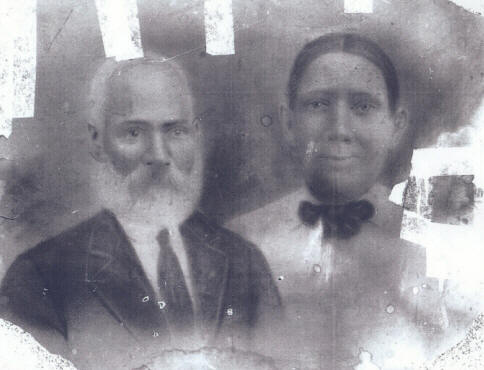
ImageMARTIN JOHN LOCUS (1843-1926) and DELPHIA TAYLOR LOCUS (1850-1923). Martin was the son of Martin Locus and Eliza Brantley Locus of southeastern Nash and later western Wilson County. Delphia was the daughter of Dempsey Taylor and Eliza Pace Taylor of northern Nash County.

In the 1860 census of Winsteads, Nash County: Dempsey Taylor, 46, wife Liza, 44, and children Margaret A.W., 10, Delphia A., 10, Rildy A.R., 8, and Joel R., 6.

John Locus. Died 22 December 1926, Taylors, Wilson County. Colored. Widower. Farmer.  Age 83 years, 4 months, 19 days. Born Wilson County to unknown father and Eliza Locus of Nash County.  Buried family cemetery, Wilson County. Informant, John Locus Jr., Wilson County.

[Hat tip to Europe Ahmad Farmer.]

Free Colored Slaveowners, Beaufort County, 1830.

In Washington district: Hull Anderson, 4 slaves; Jos. Bonner, 2; Edme Brown, 1; Betsy Walker, 3; Church Moore, 2; John Brown, 2; Clarrissa Newton, 4; Abram M. Moore, 1; Eli Moore, 3; Easter Moore, 1.

In North Creek Town district: Thos. Walker, 4; Thos. Bowen, 2.

A wealthy and worthy colored citizen.

Napoleon Hagans, a wealthy and worthy colored citizen, died Monday night.  He will be greatly missed by the entire community.

Headlight, Goldsboro, 27 Aug 1896.

To emancipate certain negroes.

LIST OF ACTS Passed by the General Assembly of North-Carolina, at their late Session.

PRIVATE ACTS.

14. An act to confirm the claims to freedom of Kitty, the wife of John Carruthers Stanly, and of Eunice Carruthers Stanly, Kitty Green Stanly, and Alexander Stewart Stanly.

16. An act to emancipate and set free certain negroes formerly the property of Alexander Worke, late of Iredell county.

33. An act to emancipate David, the property of Thomas Trotter, of Washington county.

54. To emancipate Ben, a man of colour of Hertford county.

Star, Raleigh, 28 December 1809.

Surnames: Davie County, 1850.

The following surnames are found among free people of color in Davie County in the 1850 federal census: ANTONY, BASS, BENSON, BOWERS, BRINTLE, BROWN, BURROW, CHAMPLIN, CUPER, ELVERSON, FRY, GRIMES, HOSTLER, JOHNSON, JONES, KEMP, KENT, KING, LIVERMAN, KEPLER, MUMFORD, NICHOLS, RUSSEL, SCOTT, SEARS, SOUTHERLAND, SPARKS and VALENTINE.

I do not find many colored men engaged as chiropodists.

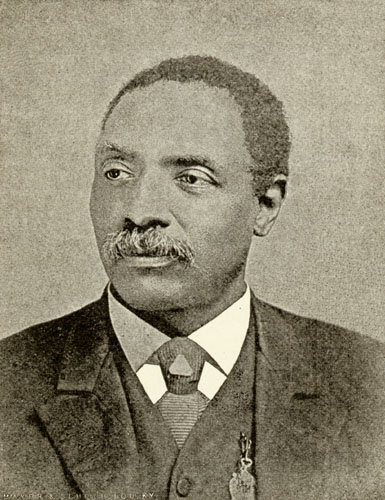
ImageDr. Jared Carey, Chiropodist and Manicure, is a very interesting character. My attention was called to him while lecturing in Cincinnati. He is a native of North Carolina, but left his native State before the war, coming to Ohio with some Quakers and free colored people. In his early life he worked on a farm and engaged in all kinds of hard work, and many a month got as pay only $6.00, which in those days was considered large wages for a farm hand.

Dr. Carey had a great desire to travel and took up the profession of Chiropody in order that he might better his own condition and in his profession visit some of the larger cities, which he did in both the United States and Canada. I do not find many colored men engaged as Chiropodists, and none that I have met are as well prepared to do the work as Dr. Carey. He has several rooms handsomely fitted up for his work at 43 Arcade, up-stairs, Cincinnati, Ohio. Dr. Carey gives employment to at least six people all the time. His patrons are among the best people in Cincinnati. In addition to his regular work he has written a book on Chiropody and Manicure. For quite a number of years he has, in connection with his profession, conducted a school of Chiropody, and quite a number of his pupils are engaged in their profession in other large cities. Dr. Carey is assisted in his work by his wife, who is quite an expert at both Chiropody and Manicure. She is a very refined and pleasant lady, who is much thought of by their patrons. Dr. Carey has by good management been able to purchase some valuable property. He has been an active and useful member of the M. E. Church. Any young person, either lady or gentleman, desiring to learn Chiropody or Manicure would do well to write Dr. J. Carey at 43 Arcade, Cincinnati, for full particulars as to terms. I am confident that in most any large town a good Chiropodist could do well, and I should like to see more of the colored people thus engaged.

From G.F. Richings, Evidence of Progress Among Colored People (1902).

To be allowed to enslave herself. (For love.)

LEGISLATURE OF NORTH CAROLINA.

HOUSE OF COMMONS.

Mr. Walser, a bill, accompanied with a memorial from the party, to allow Percy Ann Morton, a free woman of color, to enslave herself.

Weekly Standard, Raleigh, 28 January 1863.

———-

LEGISLATURE OF NORTH CAROLINA.

HOUSE OF COMMONS.

Mr. Logan presented a memorial from Queen Victoria, a free woman of color, praying that she be allowed to enslave herself. (The object of Queen Victoria in seeking to become a slave, was matrimonial, she being desirous of marrying a slave, which is contrary to the Statute in that case made and provided.)

Weekly Standard, Raleigh, 12 December 1860.