Fourth Generation Inclusive

Historical Documents of Genealogical Interest to Researchers of North Carolina's Free People of Color

Month: April, 2013

She shall be set free and taken care of.

In the Name of God Amen. I Abraham Bass of Nash County being of perfect mind and memory do this seventeenth day of June in the year of our Lord 1803 make and ordain this my last will and testament in manner an form following to wit:

Item: I give and bequeath to Ann Rose wife of Thomas Rose ten pounds current money.

Item: I give and bequeath to Ann Moore wife of Collum Moore Ten pounds current money.

Item: I give and bequeath to Charity Rogers daughter of Robert Rogers deceased ten pounds current money.

Item: I give and bequeath to Mourning Rogers daughter of Robert Rogers deceased ten pounds current money.

Item: I give and bequeath to Zona Rogers daughter of Robert Rogers, ten pounds current money.

Item: I give and bequeath to my grandson Jordan Bass one still.

Item: I give and bequeath to Thomas Hamilton one Negro woman named Little Rose also one blue chest.

Item: I give and bequeath to my daughter Elizabeth Bridgers one horse called Charlemain, one sadle and bride, and one bed and furniture her choice.

Item: My desire is that my Negro girl named Sylvia shall be set free and that Thomas Hamilton should have the care of her until she is twenty one years of age.

Item: My desire is that all the rest of my estate both real and personal not all ready given away to be sold and after paying the above legacys and debts to be equally divided between Elizabeth Bridgers and Zion Bass Heirs and John Bass Heirs in the following manner to wit: the one half of the whole of the sweeping legacy to Elizabeth Bridgers.

Item: The other half to be divided in the following manner between Jordan Bass, Polly Parker, Quinne Bass, Aldin Bass, Kitchen Bass, John Bass and Mourning Floyd.

Item: My will is that Polly Parker part of legacy shall be discretionary with my executors whether they pay her or not, until the expiration of six years.

Item: My will and desire is that if Fed Floyd husband of Mourning Floyd ever brings a lawsuit against my self or my executors for any part of my estate his part then to be only forty shillings and balance over and above the forty shillings to be for the use of supporting the said lawsuit.

Item: I constitute and appoint William Bridgers Jesse Bass and George Boddie executors to this my last will and testament and I pronounce this to be my last will and testament and no other.  /s/ Abraham Bass

Signed sealed and published in the presents of us

D. Sills, Lucy Boddie

Will Book 1, Page 157, Office of Clerk of Superior Court, Nash County Courthouse.

Principles not generally understood; or, he is not a slave, you cannot flog him.

THE SUPERIOR COURT.

The Fall Term of the Superior Court for Rowan County, was held in this town week before last: Judge Badger presided. There were but two criminal cases tried at this term: on one which there was a conviction of grand larceny. – Lemuel Bealey was found guilty, and sentenced to receive 30 lashes; 15 of which he received on Monday after Superior Court, the other 15 to be given him on the week of our next County Court.

There was one case tried at this term, which involves principles perhaps not generally understood. Major Haskins, and others, were indicted for a misdemeanor, in flogging a free negro, for some mischief he had done.  Maj. Haskins, it appears, procured two Justices of the Peace to authorize the infliction of the corporal punishment on the negro, supposing, no doubt, that the transaction would thereby be legalized. There is an old law of our state empowering Justices of the Peace to authorize the summary punishment of slaves, in cases of this kind; it was this law which led Maj. Haskins, and the Justices referred to, into the fatal error. The negro doubtless deserved punishing; but as he was free, the law knows no distinction between him and a white man. He should have been indicted, and brought into Court for trial, in the same manner that free white citizens are.

The jury found a verdict against the defendants of all that was charged in the indictment. Maj. Haskins was fined twelve hundred dollars; one of the justices 100, the other 100, and the constable who acted as executioner 10 shillings.

The negro David Valentine, has now commenced an action for damages against the plaintiffs in the above case.  Western Carolinian.

Newbern Sentinel, 9 November 1822.

Horse-stealer sold for payment of fines.

Superior Court. – At the late September term of Orange Superior Court, Judge DICK presiding, there was an unsual amount of business on the criminal docket to be disposed of. There were three convictions for Grand Larceny; two white men, and a free negro, whose trial was removed from Granville to this county.

Moses T. Hopkins, (alias Thomas Jones, and a half dozen other aliases,) a white man from Virginia, was convicted of stealing a Horse, and having prayed for the benefit of clergy, was sentenced by the Court to receive of clergy, was sentenced by the Court to receive thirty-nine lashes immediately, to remain in prison until Tuesday of November court, when he is again to receive thirty-nine, and then be discharged according to law. He has also been indicted fir Bigamy, and is a notorious offender.

Green Morrow, a white man, convicted of stealing money, was sentenced to receive thirty-nine lashes, and be discharged according to law.

John Mitchell, a free negro, convicted of stealing a Horse, was sentenced to pay a fine of sixty dollars, and to be sold for the payment of the fine and costs.

The remainder of the cases tried were for misdemeanors; and most of them originated, as is generally the case, in intemperance.

Hillsborough Recorder, 18 September 1845.

He formerly followed the sea.

Taken up and committed on the 17th Inst. to the jail of this county, a negro man by the name of John Brown, who has formerly followed the sea; he is a about twenty-four years of age, six feet high, spare made and speaks broken English; he says, on examination, that he was on board of the British merchant vessel “Canada,” bound from Trinidad to Newfoundland, as a sailor, and captured just before the restoration of peace, by the privateer Hero, commanded by capt. Waterman. Said vessel Canada, was brought into Beaufort in this state, condemned and sold at Washington. All the crew except himself returned to home, he remained at Greenville and passed for a freeman, until a few days past he was sold to a Mr. MacLeod of Richmond county, by whom he is not certain; on his way he absconded with an intention of returning to Greenville. It is hoped that the Marshal of this state will make enquiries into the above circumstances, and a permit will be required from his hand before the purchaser will be permitted to pay charges and take him away. Also committed on the same day, a negro man who answers to the name of Joe, about twenty one years old, five feet and a half high and remarkably black, says he was sold by William Beaton of Lenoir county, to a speculator, whose name he does not remember, and that he deserted this dealer in human flesh on Deep river. The owner of this negro is requested to prove property, pay charges and take him away.  ROBT. GULLY, jun. Shff., Smithfield, Johnston county, June 20, 1816.

Star, Raleigh, 25 June 1816.

An act authorizing him to free his wife and son.

An Act authorizing John Malone, a free man of color, to emancipate his wife and son, upon certain conditions herein mentioned.

Be it enacted by the General Assembly of the State of North Carolina, and it is hereby enacted by the authority of the same, That John Malone, a free man of color, in the county of Wake, be, and he is hereby authorized to emancipate from slavery, Cherry, his wife, and Edmond, his son, who are the slaves of the said John Malone; and that the said Cherry, by the name of Cherry Malone; and the said Edmond, by the name of Edmond Malone, shall thence-forth be free and have and enjoy the same rights and privileges as if they had been born free in this State, and may at their pleasure continue to reside in North Carolina; any law to the contrary notwithstanding; Provided, That the said Edmond Malone shall be, after his emancipation, considered in law the legitimate son and heir of said John Malone, and capable in law to succeed as such to the property, real and personal, whereof the said John Malone may die siezed and possessed, without devising it, or otherwise conveying it to others, in all respects, as though the said Edmond had been born in lawful wedlock of the body of the lawful wife of the said John Malone; and provided further, That the said John Malone shall in due form of law intermarry with said Cherry Malone, and make her his lawful wife, on the same day that she shall be emancipated by him from slavery.

Sec. 2. Be it further enacted, That before the said John Malone shall emancipate the said slaves Cherry and Edmond, and as a precedent condition to give the said act of emancipation effect in this State, the said John Malone shall give a bond, in the penal sum of five hundred dollars, payable to the State of North Carolina, and conditioned that the said slaves, Cherry and Edmond, shall each be of good behavior during his or her residence in the State, and that neither of them shall, after their emancipation, become chargable to the county or any parish or county in North Carolina; and further conditioned, that the said John Malone will renew the said bond, with approved security when it shall at any time be required by the county court of Wake; and the clerk of the county court of Wake, under the written approbation of any two justices of the peace or the county court of Wake, may take the first bond, and the said John Malone shall give one or more good and approved sureties to the said bond, as well the one executed at first, as any other given in renewal thereof. [Ratified 2nd of January, 1847]

Chapter CLXII, Public and Private Laws of North Carolina,1846-47, North Carolina State Library.

In the 1850 census of Raleigh, Wake County: John Malone, 58, livery stable keeper, born Virginia; wife Cherry, 49, born NC; son Edmond, 30; plus Elisabeth Hinton, 22, Sarah J. Leary, 21, William Laws, 17, James Roe, 18, Bryant Smith, 14, Elijah Rollins, 9, Burtie Morgan, 11, Aribella Smith, 13, Virginia Somerville, 9, and James Harriss, 22.

His father was emancipated in Virginia.

Committed to the Jail of Rockingham county, (N.C.) on the 25th ult. A Negro Fellow, who says his name is JOHN ARMSTRONG, and that he is a free Man – says his father was emancipated by a family of the name of Ladd, near Richmond – says he lived with Mr. Ratford, who formerly kept the Eagle Tavern in that place, and that he also lived several years with Mr. Smoke, who now keeps the Eagle Tavern, in the capacity of Ostler.

JOHN is about 30 years of age, 5 feet 8 inches high, is very much pitted with the small-pox, and when apprehended, said he was on his way to Tennessee, where his wife resides. The owner is requested to prove his property, pay charges and take him away.   JOHN LILLIARD, Jailer. 7th June, 1809.

Star, Raleigh, 20 July 1809.

Stealing free negroes of color.

Stop the Villains. Escaped from the Jail in Tarborough on the night of the seventh instant, William B. Crawford, a notorious counterfeiter, between sixty and seventy years of age, about six feet high, his head white; also, John M. Windham, about thirty years of age, five feet seven or eight inches high, with an uncommon long face and chin, his fore teeth very long and prominent; this villain was imprisoned at the last term of the Superior Court of Edgecombe to eighteen months imprisonment, for stealing free negroes of colour; also Elias Owens, about fifty years of age, who was in Jail for debt, and the principal instrument in breaking the Jail. I will give one hundred dollars reward for their apprehension and delivery in this place, or a proper portion for either of them.  BENJAMIN HART, Jailer.

Star, Raleigh, 23 July 1819.

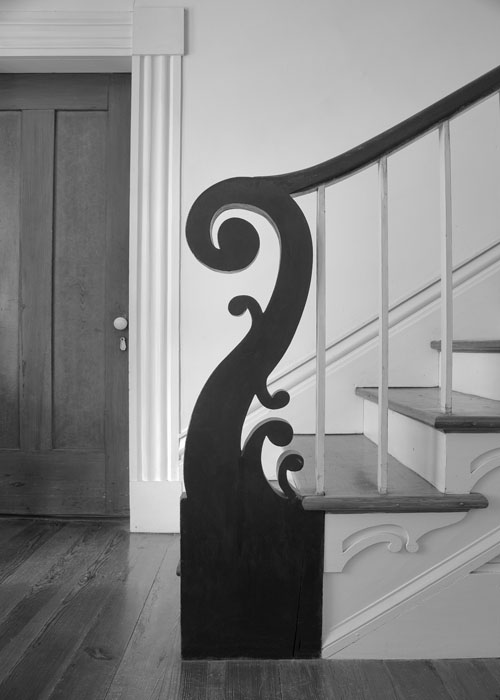
Master craftsman.

1. Image2. Image3. Image

1. Thomas Day’s cutouts and molding liven up a front porch. 1860, Garland-Buford House, North Carolina. Photo by Tim Buchman, 2013.

2. Day did architectural work inside clients’ home, adding his flourish to facades, staircases and archways. Newel, 1855, Glass-Dameron House, North Carolina. Photo by Tim Buchman, 2013.

3. Day’s uniquely “Exuberant Style” in full bloom. Whatnot, 1853-1860. Collection of Margaret Walker Brunson Hill, courtesy of the Renwick Gallery.

From http://blogs.smithsonianmag.com/aroundthemall/2013/04/the-incredible-true-story-of-north-carolinas-most-prominent-antebellum-master-craftsman-freeman-thomas-day/#ixzz2QajpZC9G 

He died instantly.

Henry Hays, a free man of color, was shot in Fayetteville, a few days since, by John Russel, a white man. Hays died instantly, and Russel was imprisoned. – ib.

Tarboro’ Press, 16 November 1839.

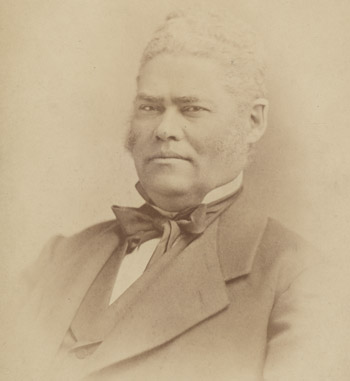
John Jones.

ImageJohn Jones was an outspoken civil rights activist and a committed leader in the fight to repeal Illinois’ Black Codes. He was born in Greene County, North Carolina to a free mulatto mother and a German-American father. Trained as a tailor, Jones migrated to Memphis, Tennessee, then moved to Chicago in 1845 with his wife Mary Richardson Jones.  He established a successful tailor shop at 119 Dearborn Street. Not long after his arrival in Chicago, Jones befriended local abolitionists Charles V. Dyer, a physician, and Lemanuel Covell Paine Freer, a noted lawyer. Freer taught Jones to read and write. Jones saw the value of the skills for business and also put them to masterful use in abolition work, including the publication of a 16-page pamphlet entitled “The Black Laws of Illinois and Why They Should Be Repealed.” Jones also worked tirelessly in the struggle against the Fugitive Slave Act of 1850, which denied runaway slaves the right to trial by jury and imposed high fines on anyone who aided slaves or interfered in their capture. Though he arrived in the city with just $3.50 in his pocket and had no formal education, by 1860 Jones was one of the nation’s wealthiest African Americans. In 1871, Jones was elected the first black Cook County Commissioner.

———-

John Jones’ 1844 certificate of freedom, issued by the State of Illinois, described him as 25 years old; 5 feet ten inches tall, and mulatto; “has a scarr over the Left Eye Brown a Scratch across the cheek bone a scarr on the left Shin bone Taylor to trade.”

Photo: Chicago History Museum. Text adapted from “Early Chicago: Slavery in Illinois,” http://www.wttw.com/main.taf?p=76,4,3,4; see also, and more particularly, Sylvestre C. Watkins, Sr., “Some of Early Illinois’ Free Negroes” in Journal of the Illinois State Historical Society, vol. 56, no. 3, Emancipation Centennial Issue (1963); http://www.encyclopedia.chicagohistory.org. 

In the 1860 census of Ward 2, Chicago, Cook County, Illinois: John Jones, 43, tailor, born NC; wife Mary, 40, born Tennessee; daughter Susan, 16, born Illinois; and Rachel Pettit, 20, born Illinois. Jones reported real property valued at $17000 and personal property at $700.